



It’s easy to get caught up in the excitement of a crypto startup idea. Someone might believe they have the best idea since Bitcoin, cracked how to bring DeFi into the mainstream, or developed an exchange that’s easier to use than the best digital banks. With an idea like that, all the team needs to do is launch it, and the invisible hand of the free market will reward it with capital. Right?
Unfortunately, not. Even the best idea is doomed without expert blockchain content creation for crypto startups. The market is crowded and loud. Trust has basically vanished due to constant rug pulls and hacks.
Every day, hundreds of new startups go live, but their communities remain empty, their token charts flatline, and the team moves on. This shows that users are no longer willing to risk capital on big promises. To succeed, a crypto startup must understand how to use crypto copywriting teams to produce content that educates, builds trust, and unlocks scalable growth.
The Crypto Startup Content Challenge: Education, Trust & Scale
There are three primary challenges that face crypto startups trying to drive adoption of their token, protocol, or exchange. Only by understanding these factors can a team develop an effective strategy for blockchain content creation for crypto startups.
Challenge 1: The Education Gap
- Blockchain technology is complex and difficult for new users to understand
- Technical jargon creates friction during onboarding
- Different audiences (users, investors, developers) require tailored education
Challenge 2: The Trust Deficit
- Market confidence weakened after the FTX collapse
- High prevalence of scams, rug pulls, and hacks
- Anonymous teams and unclear regulations reduce credibility
Challenge 3: The Scaling Problem
- Limited budgets restrict consistent content production
- Small teams struggle to manage growth and marketing
- Intense competition makes user acquisition more difficult
A crypto start-up should carefully consider all three pillars and plan to meet the needs of every them thorough comprehisnve crypto marketing strategy.
Phase 1: Educational Content That Simplifies Blockchain
Education, education, education. It might seem a little dry in a world often dominated by memes, AI-generated videos, and catchy headlines, but for long-term success, especially when a startup is technically advanced, education is critical.
The market needs to understand what a startup does and why it matters; otherwise, it is just another ticker. For example, a project launching a DeFi protocol offering better yields on USDT will have to compete with major platforms like Aave, so it must clearly explain why it is worth a user’s time and capital. There are three major pillars involved in the education process:
The Simplification Framework
- Use relatable analogies: “Your USDT earns yield like a high-interest savings account, but on-chain”
- Break down complexity: explain liquidity pools as shared funds users deposit into for rewards
- Visualize processes: show how USDT moves through the protocol step by step
Content Formats for Education
- Explainer videos: “How to earn yield on USDT in 90 seconds.”
- Infographics: visual flow of depositing, earning, and withdrawing
- Tutorials: step-by-step guide to connecting a wallet and staking USDT
The "Why → What → How" Structure
- Why: Traditional savings offer low returns
- What: a DeFi protocol offering higher USDT yields
- How: deposit USDT and earn yield from lending and liquidity mechanisms
Getting the structure correct is vital. All content, regardless of format, should contribute to building the Why → What → How structure, taking the user on a clear journey through the process.
Phase 2: Trust-Building Content Strategies for Crypto Startups
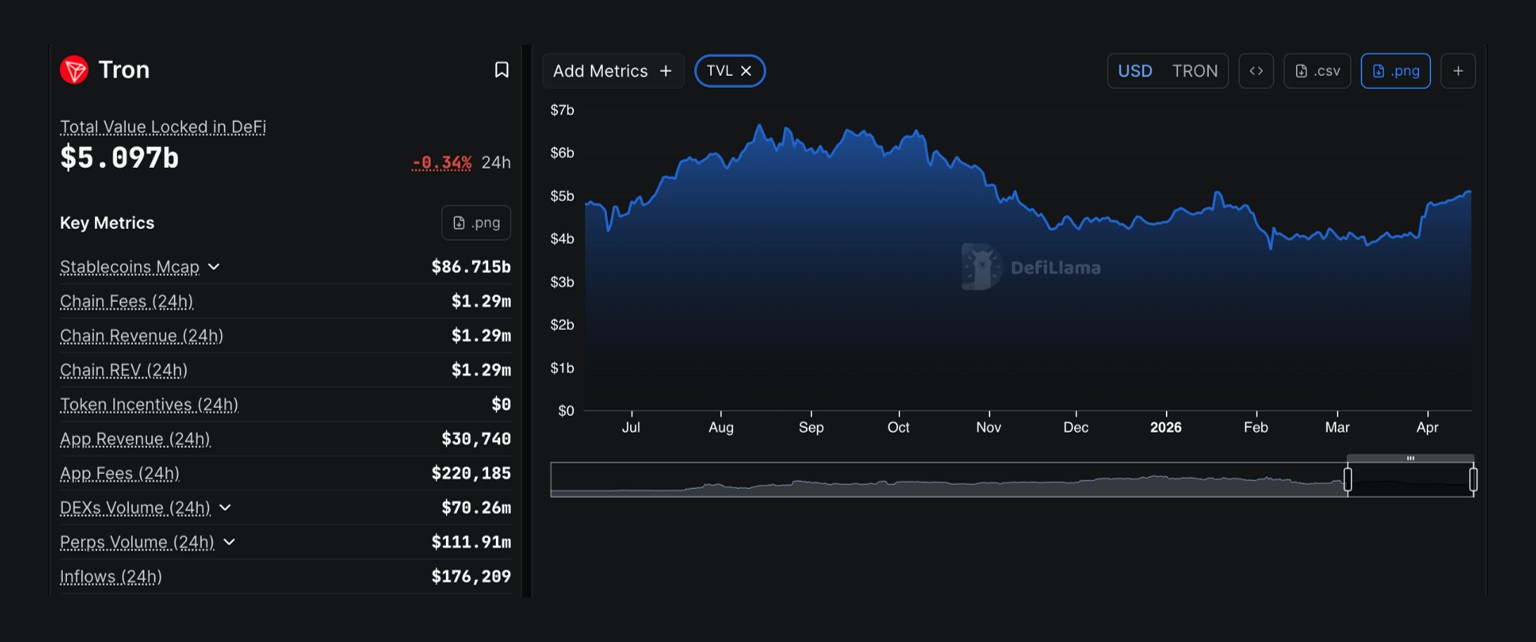
Trust is built over time. Projects that expect the community to blindly accept their narratives and promises are destined to be disappointed. This process takes time and resources, but the rewards are clear. There is a reason that projects launching smart contract solutions on chains like Tron have grown their total value locked to over $5 billion. It comes down to trust.
Although building trust in the crypto market has been repeatedly damaged by scandals and crashes, most notably events like the Bybit exchange hack and the constant pump and dumps launched on platforms like pump.fun, there are four key processes that can still unlock trust if implemented correctly and supported by expert Web3 digital marketing teams.
These four steps illustrate the trust building proces switch the USDT lending example from phase 1:
Transparency as Content Strategy
- Share clear updates on how USDT funds are used within the protocol
- Publish roadmap progress and feature rollouts
- Break down tokenomics and yield sources in simple terms
Proof-Driven Content
- Show real on-chain data of USDT deposits and returns
- Publish user case studies, earning yield over time
- Highlight credible partnerships and integrations
Authority-Building Content
- Create educational articles explaining DeFi yield strategies
- Share insights on stablecoin markets and risk management
- Participate in podcasts or panels discussing USDT lending
Trust Signals to Emphasize
- Highlight security audits and smart contract testing
- Show real team members with verifiable backgrounds
- Communicate compliance and a security-first approach
These points are supported by the education phase, as once users begin to understand the produce they will analyze the trust signals.
Content Pillars: Building Your Crypto Startup Content Foundation
Content is at the heart of any strategy. The two phases rely on high-quality content, generally written by experts in crypto SEO and crypto copywriting. A well-placed article written by a professional is often worth ten times more than a hundred low-quality articles pushed out through a newswire that does not reach serious investors and traders. But what exactly are the content pillars that a crypto startup must leverage?
The 4 Essential Content Pillars for Crypto Startups
- Product Education
Explain how your USDT lending protocol works, including how users deposit, earn yield, and withdraw funds. For example, a guide showing how a user can earn passive income on idle USDT. - Industry Insights
Provide analysis on DeFi yields, stablecoin demand, and competitor platforms. For example, comparing your protocol’s returns with platforms like Aave. - Community & Culture
Share user stories, testimonials, and updates from your ecosystem. For example, highlighting a user who consistently earns yield using your protocol. - Thought Leadership
Publish forward-looking insights and opinions on DeFi and stablecoins. For example, explaining where USDT lending markets are heading and how your protocol fits in.
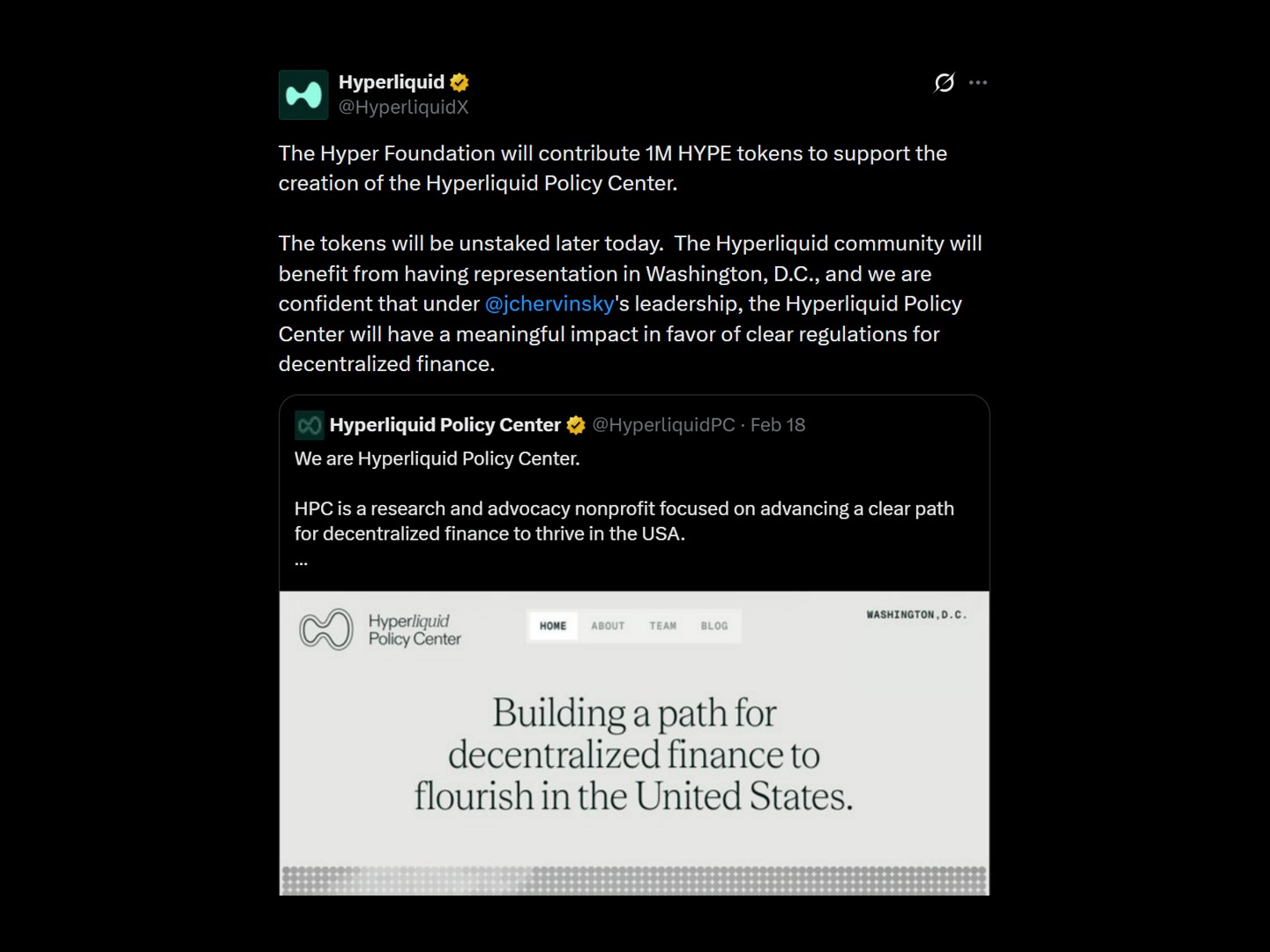
A strong example of this approach is the Hyperliquid project. The team has launched its own “Hyperliquid Policy Center,” where it publishes research aimed at policymakers in Washington. This content is then reused across social media to signal credibility and build trust with its community.
While Hyperliquid is an extremely strong example of leveraging content pillars, it is also a project with significant resources and a large team. Every startup has to start somewhere, but maintaining a clear long-term strategy is essential instead of randomly distributing content and budget without direction.
Scaling Content Production with Limited Resources
Not everyone has the same resources as projects like Hyperliquid. Startups are generally running on limited funds with a small team, and if they are lucky, they raise some capital through a presale. However, there are a few ways to maximize the value of every piece of content.
AI has been both a curse and a blessing for the content creation industry. It has created huge amounts of low-quality content, but that does not mean it cannot help teams. The key is to use AI as an assistant, not as the driver. Both search engines and users are increasingly sensitive to poor-quality AI-generated content, so human oversight and expertise remain essential.
Leveraging the community for content can be highly effective. In the case of a USDT lending protocol, users can share their yield results, strategies, or experiences. This can be turned into testimonials, social posts, or case studies that build trust while reducing the burden on the core team.
Outsourcing versus in-house is ultimately a question of resources. Realistically, for a crypto startup to succeed in this market, it will need external support. This could come from freelancers, but often a specialized Web3 startup marketing agency provides a more comprehensive solution, with the tools and expertise needed to launch and manage effective campaigns.
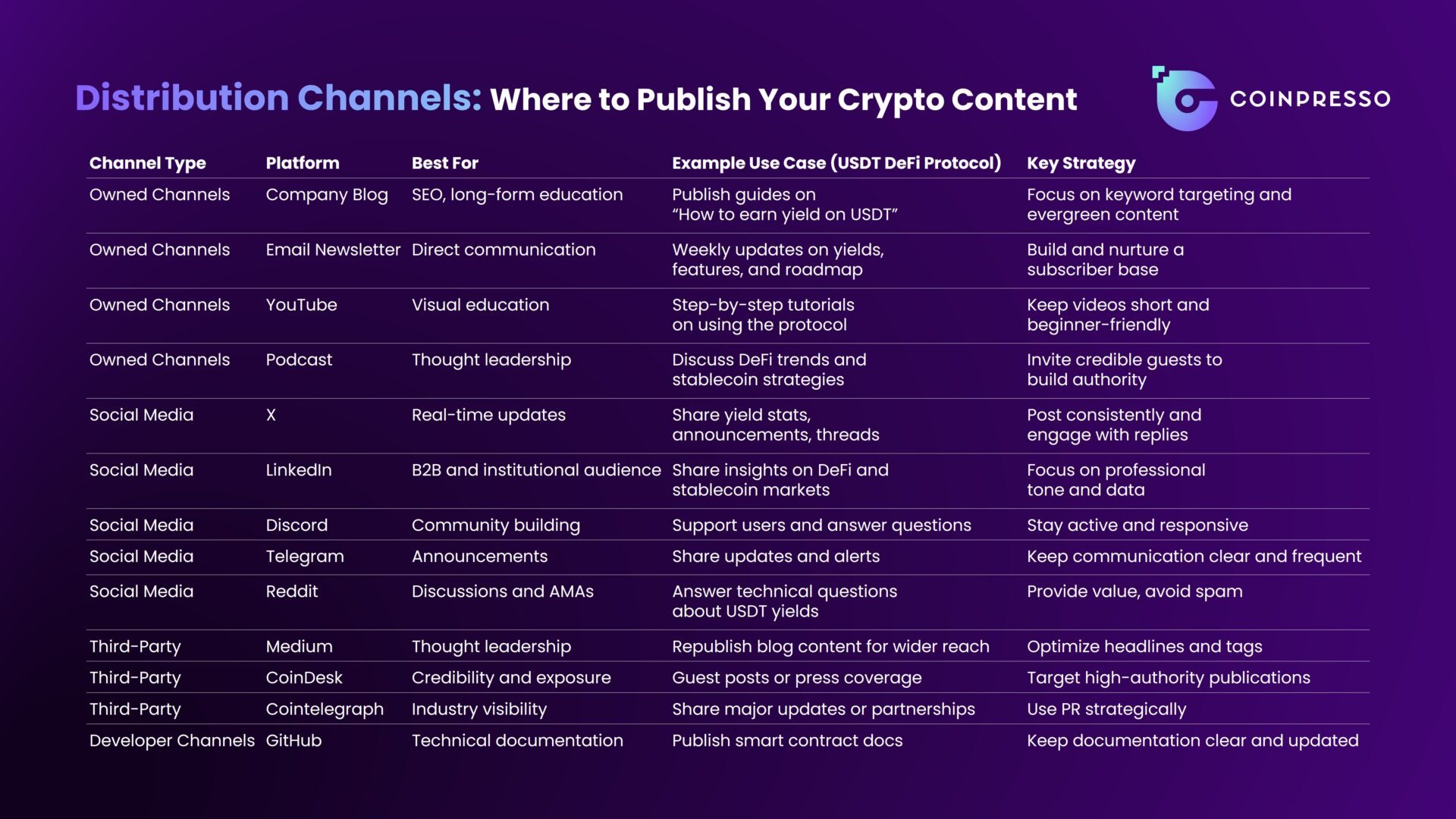
Distribution Channels: Where to Publish Your Crypto Content
Where the content gets published and managed also requires consideration. Almost all successful projects leverage their content across multiple mediums, and to save resources, many pieces can be repurposed for several different platforms.
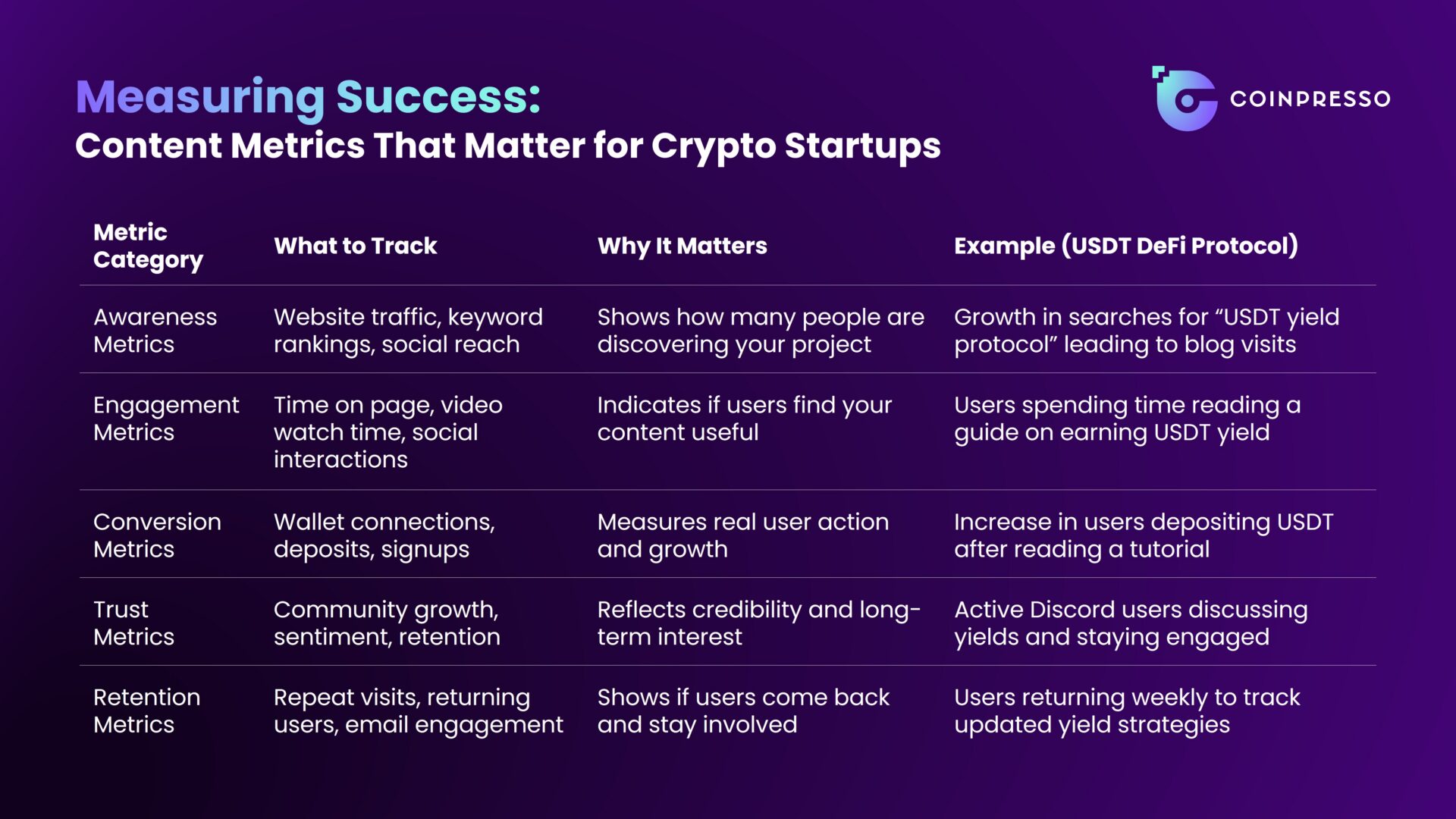
Measuring Success: Content Metrics That Matter for Crypto Startups
Data cannot be overlooked in any marketing campaign, especially one that is building the foundations for a crypto startup. Without the effective use of data, a marketing strategy is essentially operating in the dark.
Using the right tools is also important. Platforms like Google Analytics 4 can track user behavior, while on-chain tools like Dune Analytics help measure actual protocol usage. By consistently analyzing and refining content based on these insights, startups can improve performance and scale more effectively.
Final Thoughts on Blockchain Content Creation for Crypto Startups
Launching a successful crypto startup in 2026 requires a coherent marketing strategy that leverages content across a range of pillars. This allows teams to educate the community on what makes the product valuable in a crowded market and build trust in their ability to deliver for traders and investors.
The most successful content creation processes depend on using a variety of content formats across multiple channels to educate potential users, then reinforce trust through transparency and consistent, effective signaling over time.
FAQs
How do I explain complex blockchain technology without oversimplifying or losing credibility?
Use simple analogies first, then add technical depth. Layer explanations so beginners understand while advanced users still find value.
What's the minimum content a crypto startup needs before launching?
- Landing page explaining the product
- One strong explainer article
- Litepaper or documentation
- Active social channels
Should I hire a crypto-specific content writer or use AI tools like ChatGPT?
Use both. AI speeds up drafting, but experienced crypto writers ensure accuracy, positioning, and credibility in a competitive market.
How do I build trust when my crypto startup has no track record yet?
Be transparent. Share updates, show product progress, explain risks, and highlight real usage or early user results.
What's the best content format for educating users about DeFi protocols?
Short videos attract attention, guides explain details, tutorials drive action. Use all three together.
How often should a crypto startup publish content?
There isn’t a specific figure. It depends on the type of project and the budget of the team but 1 to 2 quality posts weekly plus consistent social updates should be a minimum to keep the community engaged.
How do I create content that attracts both retail users and institutional investors?
- Simple guides for retail users
- Data-driven reports for institutions
- Separate messaging for each audience
What content mistakes do crypto startups make that kill trust?
Overpromising, hiding risks, anonymous teams, and inconsistent messaging quickly reduce credibility.
How do I repurpose one piece of content into multiple formats efficiently?
Turn one blog into threads, videos, emails, and visuals. Each format targets a different channel and audience segment.
When should a crypto startup invest in a content marketing agency vs. doing it in-house?
When internal resources cannot maintain quality and consistency, agencies provide scale, strategy, and execution.