

If you cannot get a VC’s attention within the first three slides of a pitch deck, it is effectively over. The majority of investors spend between two and three minutes looking at a deck before moving on to the next one. Everyone is competing for the same pool of capital, and with the number of rug pulls in crypto, funding is increasingly difficult to secure.
While a pitch deck alone will not secure an investment, it opens the door to the next conversation. It acts as a launch pad that can lead to an agreement capable of turning a strong idea into a real business. But how do you create a pitch deck that actually works? Is it simply a question of having a great graphic designer or a catchy tagline?
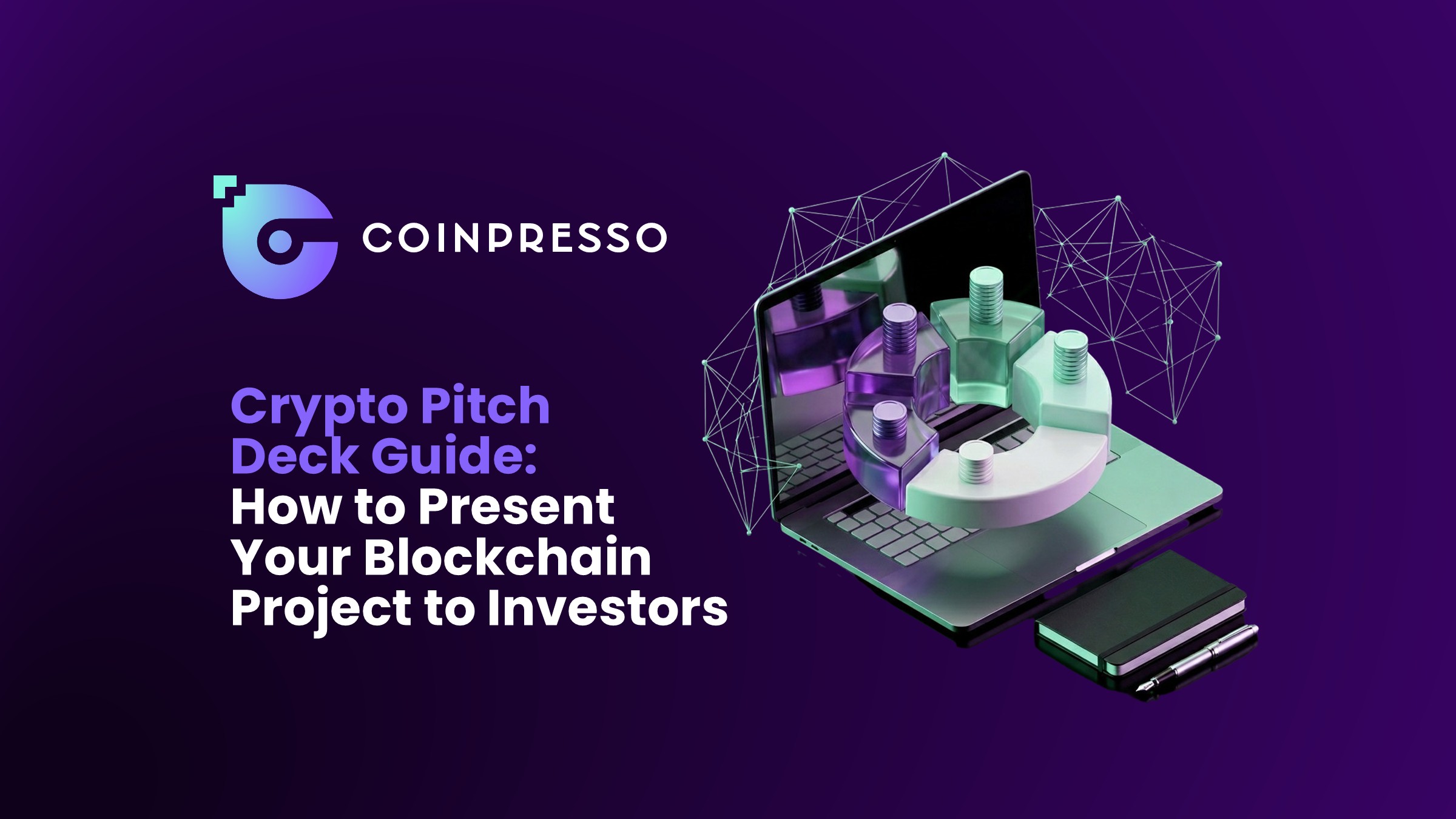
This article will explain how crypto marketing agencies design pitch decks using a pitch deck created by the Coinpresso team that raised over $1 million.
The 2026 Crypto Fundraising Reality
There is no hiding from the reality that crypto VC fundraising is not what it used to be. The 2022 crash, broader market volatility, high-profile rug pulls, and the shift in VC interest toward AI have made securing major investment for crypto projects increasingly difficult. According to CryptoRank, global VC investment into crypto hit a two-year low, with $659 million raised in April 2026. Does this mean that chasing VC investment is a waste of time? Not exactly. Instead, it means teams need to be prepared for significantly more competition.
The 2.5-minute window is one of the most important realities founders need to understand. Most investors spend only a few minutes reviewing a pitch deck before deciding whether a project is worth further attention. If the deck fails to clearly explain the opportunity, traction, and business model quickly, the investor simply moves on.
For this reason, the goal of a pitch deck is not to explain every technical detail. Its job is to secure the second meeting. The deck should create enough confidence and curiosity for investors to want a deeper conversation with the team.
The market has also changed significantly. In previous cycles, hype, vague community narratives, and speculative token mechanics were often enough to attract capital. In 2026, investors care far more about revenue, retention, sustainability, proof of traction, and strong business fundamentals.
Breaking Down a Real Crypto Pitch Deck
There are dozens of different formats for a pitch deck out there, but what really matters is hooking the reader and then drawing them deeper into the project’s value. Investors want to see a clear path toward profitability because, at the end of the day, that is what they are trying to understand. Let’s take a look at an example of a successful pitch deck that raised $1 million for the Chainspin crypto casino.
The first slide immediately explains the core value proposition with the line “Own the Casino. Earn From Every Bet.” This is important because it tells the investor exactly what the product is trying to achieve within seconds. It combines gambling, ownership, and token incentives into one simple statement without overwhelming the reader with technical explanations.

The market opportunity slide also works well because it clearly frames the industry size and links it directly to crypto advantages such as borderless access, instant settlement, and transparent systems. Investors need to understand not only that the market is large, but also why blockchain technology improves the existing model.

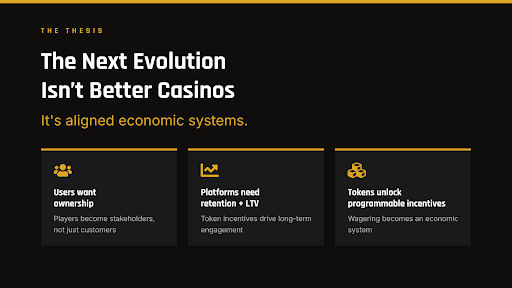
The next few slides focus on building the broader narrative around the market opportunity and why crypto-native wagering systems make sense. Instead of immediately diving into architecture or blockchain infrastructure, the deck explains the idea of a “user-owned wagering economy” and positions users as stakeholders rather than customers. This is a good example of explaining the macro direction of the market before discussing the technical details.
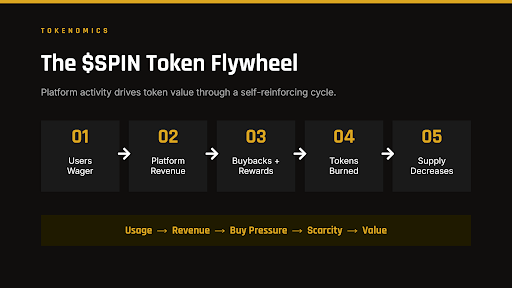
One of the strongest parts of the deck is the way the tokenomics and economic engine are explained visually. Slides covering the $SPIN flywheel, buybacks, burns, staking rewards, and revenue allocation simplify concepts that are often overcomplicated in crypto fundraising decks. Instead of filling slides with technical jargon, the presentation uses step-by-step flows to explain how wagering activity converts into revenue, token demand, and supply reduction.
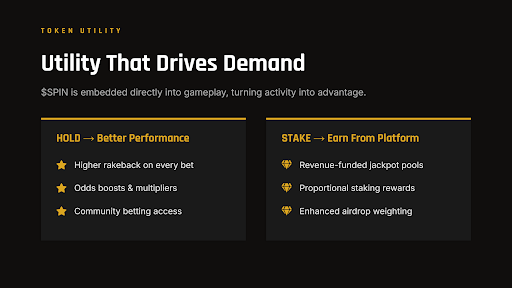
The utility slides are also important because they explain why users would actually want to hold the token beyond speculation. Features such as rakeback boosts, jackpot access, staking rewards, and enhanced airdrop weighting create practical incentives tied directly to platform usage. Investors increasingly want to see token systems connected to real activity rather than hype.
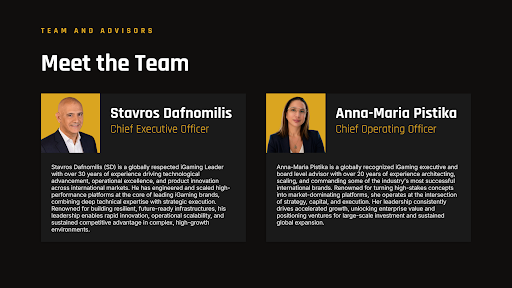
Finally, the team and advisor slides are critical in crypto fundraising. Chainspin highlights leadership experience in iGaming, infrastructure, fundraising, and Web3 growth. In modern crypto fundraising, founder credibility and execution history are often just as important as the product itself.
The key lesson from this deck is that successful fundraising presentations simplify complexity. Investors do not want a 50-page technical whitepaper disguised as a pitch deck. They want a clear narrative explaining the opportunity, the business model, the incentive structure, and why this specific team is capable of executing the vision.
The Two Slides That Require Extra Attention
There are two particularly important slides that teams often fail to emphasize enough. These are the economics slide and the founder slide.
The tokenomics slide is critical because it tells investors whether the project can realistically sustain itself over the long term. In the Chainspin deck, this is handled through the token flywheel, buyback engine, and revenue allocation slides.
Instead of simply promising token growth, the deck explains how wagering activity creates platform revenue, how part of that revenue funds buybacks, and how token burns reduce supply over time. This gives investors a much clearer picture of how the ecosystem is intended to generate value rather than relying purely on speculation.
The founder slide is equally important because investors are ultimately backing people, not just products. Chainspin places strong emphasis on leadership experience within iGaming, infrastructure, fundraising, and Web3 marketing. This helps establish founder-market fit by showing that the team already understands the gambling industry and platform scaling.
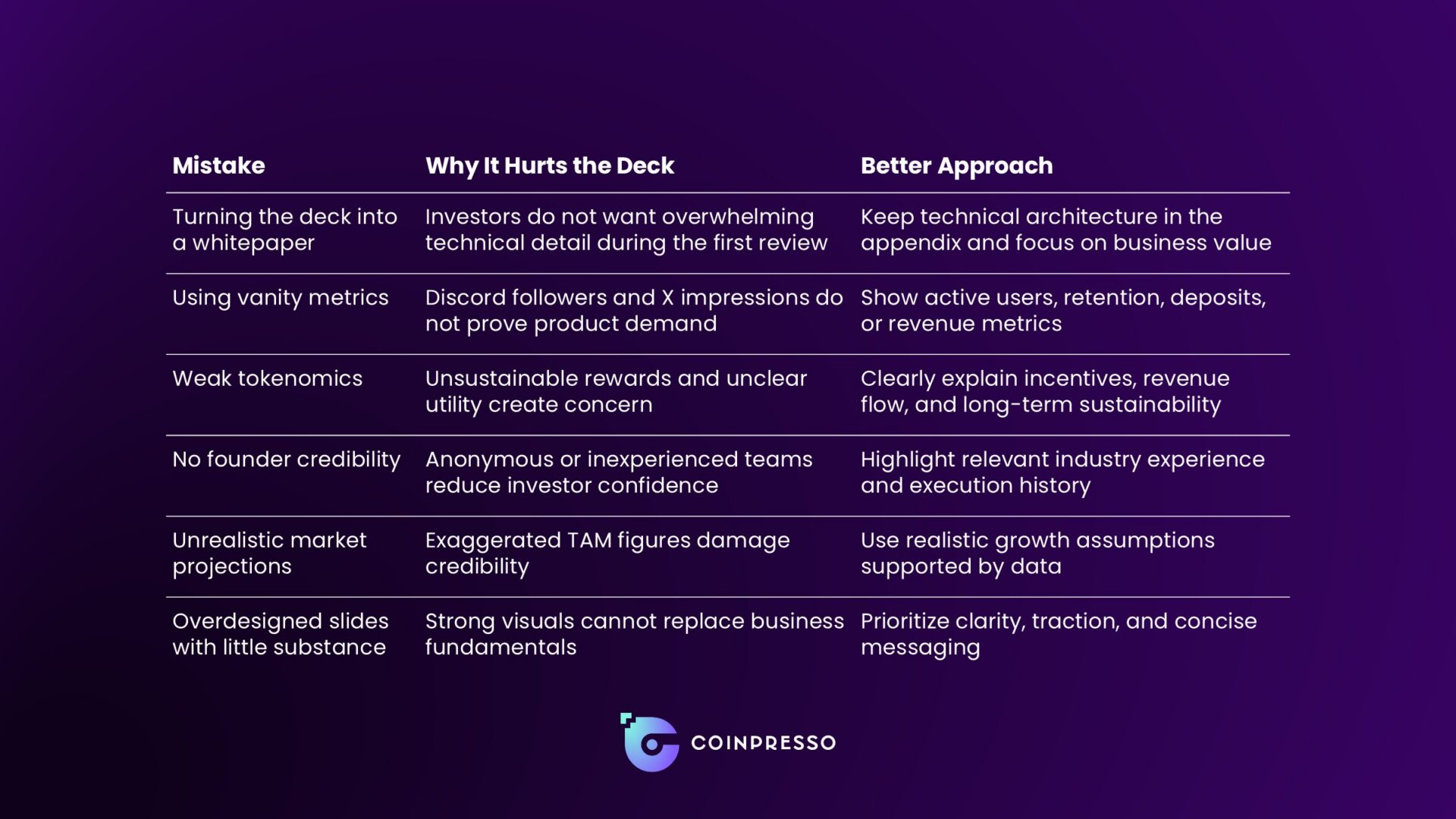
Common Pitch Deck Mistakes to Avoid
There are a few typical mistakes that are major red flags for investors. It is critical to avoid these mistakes, as they make it extremely unlikely that serious investors will schedule a second conversation.
Final Thoughts on Crypto Pitch Decks in 2026
A pitch deck is the key to unlocking the possibility of securing serious funding for a crypto project. Even as VC investment has dropped, there are still hundreds of millions of dollars being invested into projects every month by the likes of Coinbase Ventures and WAGMI Ventures, but they filter projects quickly, and a good pitch deck is one of the best ways to get your foot in the door.
It is critical to create a pitch deck with a clear hook that then builds a narrative around user onboarding, market opportunity, and long-term growth strategies. Naturally, presentation quality also matters, but it is the content that gets investors interested. The Chainspin pitch deck is an example of dozens of decks that the Coinpresso team has designed for clients who have gone on to raise capital and launch their projects.
Frequently Asked Questions
How long should a crypto pitch deck be?
Most successful crypto pitch decks are between 10 and 20 slides. Investors move quickly, so the deck should communicate the opportunity, business model, traction, and team without unnecessary filler.
Do I need to include my tokenomics in the initial pitch deck?
Yes, especially in crypto. Investors want to understand how the token creates value, how supply is managed, and whether incentives are sustainable. The Chainspin deck does this well by visually explaining buybacks, burns, staking rewards, and utility rather than overwhelming investors with technical detail.
Should I send my pitch deck as a PDF or a link?
Usually both. PDFs are easier for investors to forward internally, while hosted links allow updates and tracking. The key is making sure the formatting works perfectly on all devices.
How much technical detail should be in the deck?
Enough to prove credibility, but not enough to overwhelm the investor. The main deck should focus on the opportunity, business model, and growth strategy. Deep architecture diagrams and protocol mechanics are usually better placed in an appendix or separate technical document.