

You are not the first person to think it. Your account got suspended, the reason on the notice is vague to the point of uselessness, and somewhere around the third re-read you thought: fine, I'll just start again with a new account. New email, new card, new domain if it comes to that.
Here is the correction you need before you go any further. That instinct is the single most common way founders turn a recoverable problem into an unrecoverable one. A first suspension is Google flagging one policy issue on one account. A second account opened to route around it is a different kind of violation entirely, and it is the one Google treats as deliberate rather than accidental.
This post is not a technical explainer on how account-linking detection works. Plenty of pages already walk through that, and most of them read like an evasion manual with a disclaimer bolted on. It is the business case for doing the boring thing instead: read the notice, freeze everything, work out what actually happened, document it, and let the crypto Google Ads official appeal path do what it is designed to do.
Why a Replacement Account Is Not a Fix
A second account doesn't touch the reason the first one was suspended. The policy issue that got flagged, whether that's a certification gap, a landing page mismatch, or a tracking inconsistency, is still sitting there unresolved.
That issue is attached to your business, your product, and increasingly your identity as an advertiser rather than just an account number. Opening a fresh account doesn't detach any of that. It just gives Google a second data point to hold against the first.
What it adds is a much worse problem on top of the original one. Google's suspensions guidance is blunt about this: accounts sharing an email, a payment method, or a manager account with a suspended account will themselves be suspended, and any new account you try to create afterward gets caught the same way. That's not a rumor circulating on advertiser forums. It's the platform's own stated enforcement logic.
Think of the original suspension as a paper cut and the second account as pouring salt straight into it. One is a wound that heals with the right treatment. The other is you actively making the injury worse while insisting you're helping.
Scale matters here too. Google suspended over 39.2 million advertiser accounts in 2024, up 208% from 12.7 million the year before. That's not a system creaking under a manual review backlog. It's automated detection running at a scale where a new account quietly slipping through unnoticed is the exception, not the plan you should be building around.
Read the Suspension Notice Precisely
Start with the exact policy Google cited, not your best guess at what you think went wrong. The notice names a specific policy and, in most cases, a rough category of violation. That's your starting point, not a formality to skim past.
Founders often read the notice once, feel insulted by how generic it sounds, and stop reading closely. That's the wrong reaction.
The wording matters because your entire appeal has to speak to the specific policy cited, not a general defense of your business's good intentions. If the notice cites circumventing systems specifically, that's a different conversation from a suspension for an unapproved product category or a billing issue.
Establishing exactly what was cited decides everything that follows, including whether the scope is one account or a wider set of related accounts. Skip this step and you're writing an appeal to a problem you've invented rather than the one on record.
Freeze High-risk Activity
Stop touching anything that looks like an attempt to route around the review process. No new accounts, no new domains that mirror the suspended one, no swapping payment details or business names and hoping the new combination reads as unrelated.
This isn't caution for its own sake. Google's guidance on related-account suspensions is specific: accounts sharing an email, a payment method, or a manager account with a suspended one get pulled in too, before any human reviewer even looks at intent.
A Shopify store owner's public account of exactly this pattern is worth reading. A circumventing systems suspension followed by generic, unhelpful denials on every appeal, with community members warning against opening a second account. It's a reminder of how opaque these reviews already are before you add a flagged second account to the file.
Freeze also means leaving the existing account and its data alone rather than scrubbing history a reviewer might actually need to see. Anything that looks like tidying up before an inspection reads exactly like that to the person on the other end.
Run an Original-cause Audit
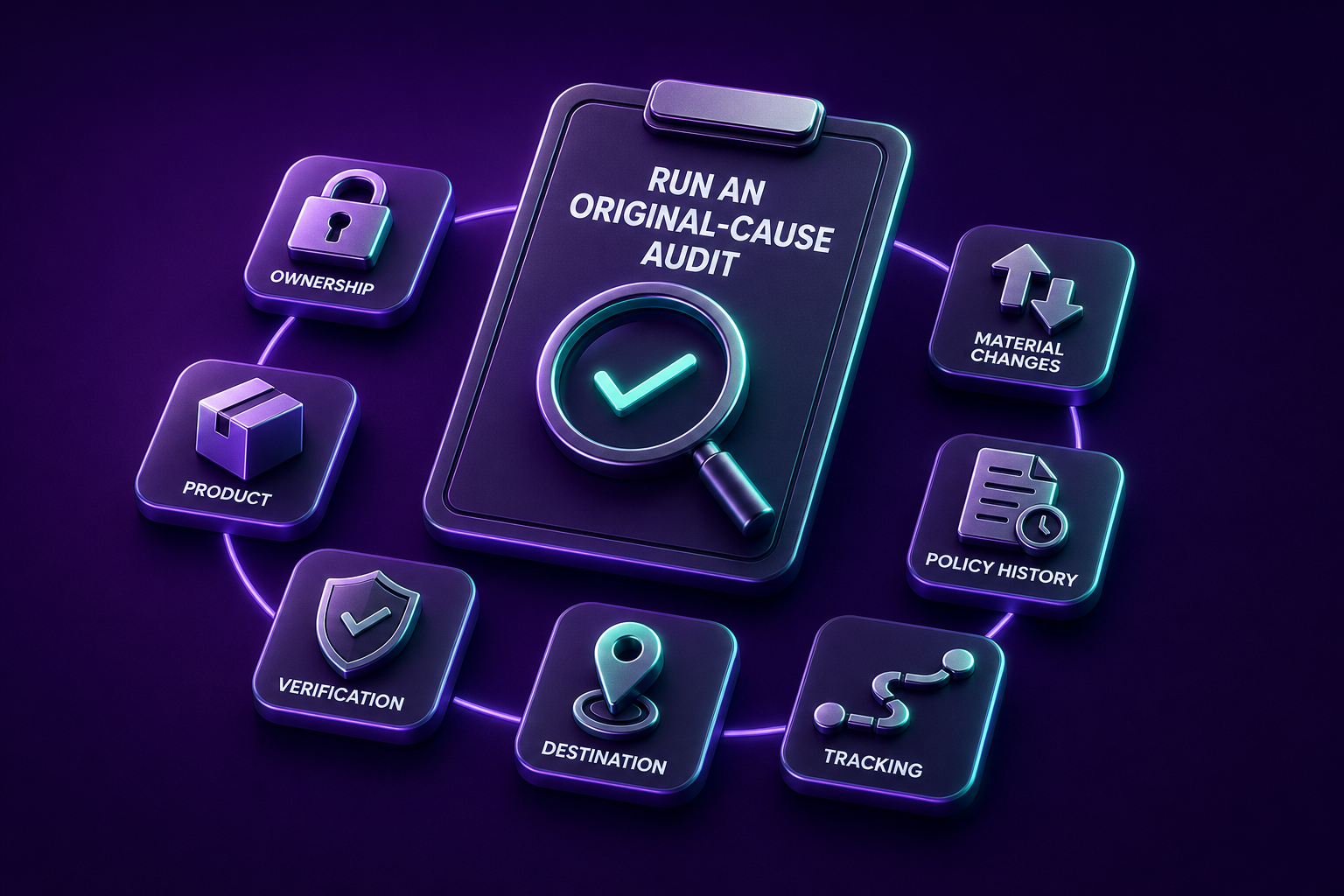
Work out what actually caused the suspension before you write a word of an appeal. This is the part most founders skip because reading a policy notice is less satisfying than taking action, but it's the only step that produces an appeal worth submitting.
Go through the account against seven things in order:
- Ownership. Is the account structure, business name, and billing entity consistent with what's registered and verified elsewhere?
- Product. Does what you're advertising match what's certified or declared, especially if it's a cryptocurrency exchange, wallet, or related product?
- Verification. Is business or advertiser identity verification complete and current, not lapsed or half-finished?
- Destination. Does the landing page match the ad's claims and the approved product, with no redirect chains or cloaked content?
- Tracking. Are conversion tracking and analytics tags configured the way you declared them?
- Policy history. Has this account, or a linked one, had prior warnings this incident might read as a continuation of?
- Material changes. Has anything shifted recently, such as domain, business name, or product scope, that a reviewer might read as an attempt to dodge a prior flag?
If your product sits in a certified category, treat this as two separate risk surfaces rather than one. Google requires certification for cryptocurrency products such as exchanges and wallets before you can advertise them at all, on top of general ad policy compliance.
General policy compliance and crypto certification are reviewed independently. A second account resolves neither, and it stacks a fresh compliance problem on an old one you haven't fixed yet.
Document Corrective Action
Once you know what caused it, prove you've fixed it. A factual record, not a narrative defending your intentions, is what an appeal reviewer actually needs.
Structure the log as a table, one row per issue, so a reviewer can scan it in seconds rather than dig through paragraphs. Here's an example of how the log should look:
| Issue cited | Root cause found | Corrective action taken | Evidence attached |
| Landing page mismatch | Redirect from ad-approved page to a different offer page | Redirect removed, single approved page live | Screenshot, page URL, date changed |
| Crypto certification gap | Product launched before certification completed | Certification submitted and approved | Certification confirmation email |
| Tracking discrepancy | Third-party tag firing to an unrelated domain | Tag removed and re-audited | Tag manager export, before/after |
Attach the underlying material to each row: screenshots, dated change logs, certification confirmations, whatever a reviewer could plausibly ask to see. An appeal built on this kind of record reads as someone who investigated, not someone who is hoping the reviewer will take their word for it. This is also the discipline behind our Web3 marketing service whenever a client comes to us mid-suspension rather than before one.
Use the Official Appeal Path
Submit the appeal through Google's own review process, and keep it to what's factual and relevant to the policy cited. Padding it with context about how good your business is, or how unfair the suspension feels, dilutes the one thing the reviewer is actually looking for: evidence the underlying cause has been fixed.
Google publishes no timeline for appeal reviews, and reinstatement isn't guaranteed. Some agencies quote day-counts online, but those are their own figures, not Google's, so plan around Google's guidance rather than someone else's estimate.
If the appeal is denied and the account moves to permanent suspension, a second account doesn't reopen that door. Advertisers whose appeals are denied have been banned from using Google Ads altogether, and any workaround account is liable to be caught and suspended in turn.
At that point the honest options are narrower. Correct everything documentable and reapply through the proper channel, or rebuild acquisition around our crypto PPC marketing offering and a paid strategy that starts clean rather than one built on a flagged history.
Conclusion
Fix the account before you fix anything else. That means, in order: read the notice for the exact policy cited, freeze every account-adjacent action that could look like circumvention, run the seven-point audit, build the evidence log, then submit one clean appeal and wait for Google's decision.
Leave alone: any new account, any domain that mirrors the old one, and any temptation to treat the appeal as a chance to argue your case rather than document it. None of that speeds up a review, and most of it gives a reviewer a reason to read the whole file as a pattern rather than an incident.
Do not turn one policy problem into an account-history problem. Ask Coinpresso to help organize a policy-first corrective-action record for official review.
FAQs
Can a business open a new Google Ads account after suspension?
Not safely, and not as a fix. Google's own guidance states that accounts sharing an email, payment method, or manager account with a suspended account will themselves be suspended, and any new account created after that will be caught the same way. The original policy issue stays unresolved either way, so a second account just adds a circumvention violation on top of it.
What does “circumventing systems” mean?
It's Google's policy against attempting to trick or work around its ad review process, and creating accounts to dodge a suspension falls squarely under it. The line between panicking into a new account and deliberately building a network to avoid detection doesn't really exist from Google's side; both get treated the same way.
How should the original cause be investigated?
Work through the account systematically rather than guessing: ownership, product certification, identity verification, landing page destination, tracking setup, prior policy history, and any recent material changes to the business. The seven-point audit above walks through each of these in order, and it's the step most founders skip in favor of writing an appeal too early.
What should an official appeal contain?
Facts tied directly to the policy cited in the notice, backed by evidence, not an argument for how trustworthy your business is. A corrective-action log with dated screenshots, certification confirmations, and tag audits gives a reviewer something to check rather than something to take on faith.
Can an agency solve a suspension by opening another account?
No agency can make a second account bypass a policy problem the first account never resolved. What a paid-acquisition partner can actually do is help you build the audit, the documentation, and the appeal itself. If you want a second pair of eyes on that process, our case studies show how we approach policy-aware campaign work for clients in certification-gated categories.